

Why Sewer Pipes Usually Don't Fail in the Middle
When people hear they have a damaged sewer pipe, they often imagine the entire pipeline has collapsed underground.
In reality, that's rarely the case.
Most sewer problems begin at the connections.
Junctions, inspection openings and pipe joints experience more movement than the straight sections of pipe between them. Over time, tree roots, ground movement, ageing materials and repeated use can all contribute to deterioration at these critical connection points.
That's exactly what we discovered at this Baulkham Hills Drainage Solutions property.
Rather than replacing the entire sewer line, our team repaired the section that had actually failed while upgrading the inspection opening to make future maintenance much easier.
Sometimes the smartest sewer repair isn't the biggest one.
It's the most targeted.
A Sewer System Is More Than Just One Pipe
Although it's hidden beneath the ground, your home's sewer system is made up of many individual components working together.
There are straight pipe runs, junctions where different branches connect, inspection openings that allow plumbers to access the system, and fittings that guide wastewater towards the main sewer.
Each serves a different purpose.
A junction, for example, combines multiple drainage lines into one.
If that junction begins to crack or shift, problems often develop long before the rest of the sewer pipe shows signs of deterioration.
Wastewater may begin escaping.
Tree roots may find their way inside.
Blockages become more frequent.
What appears to be a simple blocked drain is sometimes the first indication that a structural component has reached the end of its service life.
Looking Below the Surface
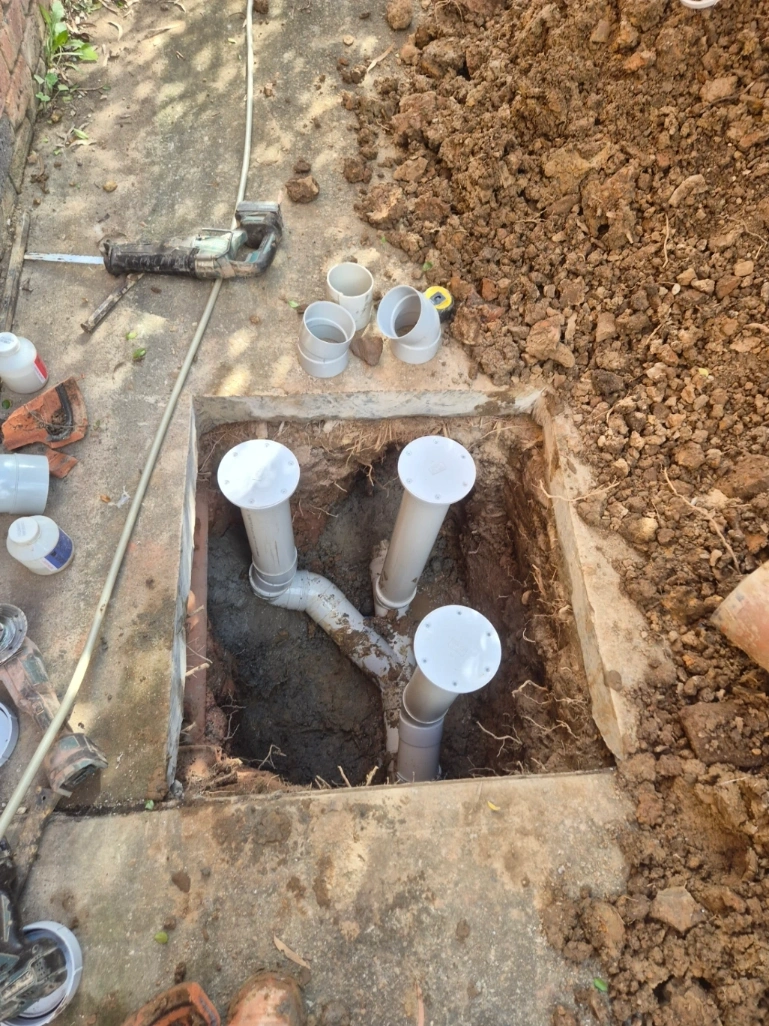
To understand exactly what had failed, excavation was carried out around the affected section of sewer.
This exposed both the damaged junction and the existing inspection opening, allowing our plumbers to inspect the condition of the surrounding pipework rather than relying on assumptions.
Excavation also revealed another opportunity.
The original inspection opening still used an ageing cast iron cover positioned below the surrounding finished surface.
While it remained functional, accessing the sewer for future CCTV inspections or maintenance would continue becoming more difficult as the infrastructure aged.
Instead of simply replacing the failed junction, we recommended modernising the inspection opening while the excavation was already open.
Sometimes the best time to improve underground infrastructure is when you've already exposed it.
Why PVC Has Become the Standard for Modern Sewer Repairs
The damaged junction and associated pipework were removed before new PVC sewer fittings were installed.
PVC has become the preferred material for modern sewer systems for several reasons.
Unlike older materials, it won't corrode underground.
Its smooth internal surface also allows wastewater to flow more efficiently, reducing the opportunity for solids to build up over time.
Equally important is the accuracy of installation.
Even the best materials won't perform properly if the pipe isn't laid with the correct gradient.
Our team carefully realigned the sewer line to maintain consistent fall throughout the repaired section, allowing wastewater to continue flowing naturally under gravity without creating low spots where debris could accumulate.
Why Inspection Openings Matter More Than Most Homeowners Realise
One of the most valuable parts of a sewer system isn't the pipe.
It's the access.
An inspection opening allows plumbers to inspect, clean and diagnose underground drains without excavating the property every time a problem occurs.
Unfortunately, many older homes still have inspection points that sit below ground level or use outdated fittings that make future servicing more difficult than it needs to be.
At this property, the original cast iron inspection opening was upgraded to a modern PVC inspection point positioned at finished surface level.
The improvement might seem small today.
Years from now, however, that accessible inspection point could save considerable time, excavation and cost whenever CCTV inspections or drain cleaning are required.
Sometimes the biggest benefit of a plumbing upgrade isn't today.
It's making the next repair easier.
Why Concrete Protects Underground Pipework
Once the new inspection opening had been installed, it was securely concrete encased before the surrounding driveway was reinstated.
Concrete isn't used simply to make the area look tidy.
It helps stabilise the inspection point, protecting the pipework beneath from movement caused by vehicles, soil settlement and everyday use.
The driveway was then reinstated, returning the area to service while protecting the newly repaired sewer infrastructure below.
Testing Before the Ground Goes Back
One advantage of excavated sewer repairs is that every connection can be inspected before the trench is closed.
After installation, the repaired sewer line was thoroughly tested to confirm:
- All joints were watertight.
- The pipework remained correctly aligned.
- Wastewater flowed freely.
- The new junction operated as intended.
Only after the system had been verified was the excavation backfilled and compacted.
The Opportunity You Only Get Once
One interesting part of this project had nothing to do with the original repair.
With the sewer line already exposed, our team identified another isolated defect elsewhere along the pipeline.
Rather than recommending another excavation in the future, we discussed the option of installing a sectional trenchless relining patch while the pipe remained accessible.
Sectional relining allows plumbers to repair isolated defects from inside the pipe without replacing long sections that remain structurally sound.
Although separate from the original repair, completing this type of work during an existing excavation can often reduce future costs by avoiding another round of excavation, reinstatement and site disruption.
It's a good example of looking beyond the immediate problem and helping homeowners make informed long-term decisions about their drainage infrastructure.
Sewer Repairs That Think Beyond Today's Blockage
The best sewer repairs don't simply restore flow.
They improve the overall health of the drainage system.
For this Baulkham Hills property, replacing the failed junction restored the structural integrity of the sewer, while upgrading the inspection opening made future maintenance significantly easier.
Together, these improvements help reduce the likelihood of recurring blockages, simplify future CCTV inspections and provide reliable access should maintenance ever be required again.
Underground plumbing is easy to forget when everything is working.
That's exactly how it should be.
A well-designed sewer system quietly does its job for decades, and when repairs are needed, thoughtful upgrades today can make every inspection and maintenance visit easier tomorrow.
Sewer Pipe Repairs & Inspection Opening Upgrades in Baulkham Hills
Pure Plumbing Professionals provides professional sewer repairs, underground pipe replacements, inspection opening upgrades and trenchless pipe rehabilitation throughout Baulkham Hills and surrounding suburbs.
Whether you're dealing with recurring sewer blockages, damaged underground pipework or ageing inspection openings, our experienced drainage plumbers can identify the underlying cause and recommend the most effective long-term solution.
