

Why Is Your Backyard Still Wet Days After It Stops Raining?
One of the most confusing drainage problems homeowners experience is when the rain has stopped, the gutters have emptied, yet part of the yard still feels saturated.
The natural assumption is that there's a leaking pipe underground.
More often than not, the culprit is groundwater.
Unlike stormwater that quickly flows across the surface and into gutters, groundwater continues moving beneath your property long after the rain has finished. As the surrounding soil becomes saturated, gravity slowly pulls that moisture downhill until it finds the easiest path to escape.
That was exactly what was happening at this Cherrybrook property.
The left-hand side of the home remained persistently wet after heavy rainfall, with groundwater accumulating around the retaining wall and surrounding landscape. Rather than treating the visible symptoms, our team designed a drainage system that intercepted the water before it could build pressure beneath the surface.
Rain Doesn't Just Flow Across Your Property
Most people understand how rainwater runs down a driveway or across a lawn.
Far fewer realise that water also travels underground.
After heavy rainfall, the soil acts like a giant sponge, absorbing thousands of litres of water. That water doesn't simply disappear once the sun comes out. Instead, it slowly migrates through the ground, sometimes for several days, following the natural fall of the land.
Eventually it reaches the lowest point available.
That might be:
- A retaining wall
- The side of your home
- Garden beds
- Footings
- A neighbouring property
- Areas where the lawn never seems to dry
This is why many groundwater problems seem to appear long after the storm has passed.
The rain may have stopped days ago, but underground, the water is still moving.
Why Retaining Walls Often Reveal Drainage Problems
Retaining walls are often blamed for drainage issues, but they rarely create the problem.
Instead, they expose what's already happening underground.
As groundwater naturally travels through the soil, a retaining wall interrupts that movement. Water begins building pressure behind the wall until it finds another way through.
Sometimes it seeps from the base of the wall.
Sometimes it saturates nearby lawns.
Sometimes it slowly migrates towards buildings and paved areas.
Over time, this constant moisture can contribute to erosion, unstable garden beds and increased hydrostatic pressure behind the retaining wall.
The solution isn't simply installing another surface drain.
It's intercepting the groundwater before it has the opportunity to build pressure.
Understanding the Property Before Digging
Before excavation commenced, our team carefully assessed how water was moving across—and beneath—the property.
The proposed drainage system would extend approximately 20 to 22 metres along the left-hand side of the home, eventually connecting into the existing stormwater network.
One of the most important parts of the project was establishing sufficient fall across the entire drainage run.
The trench began at approximately 300mm deep before gradually increasing to around 900mm at its lowest point, allowing groundwater to be collected and carried away using gravity rather than relying on mechanical pumps.
To access the existing stormwater connection, sections of paving were carefully lifted and stored before excavation commenced.
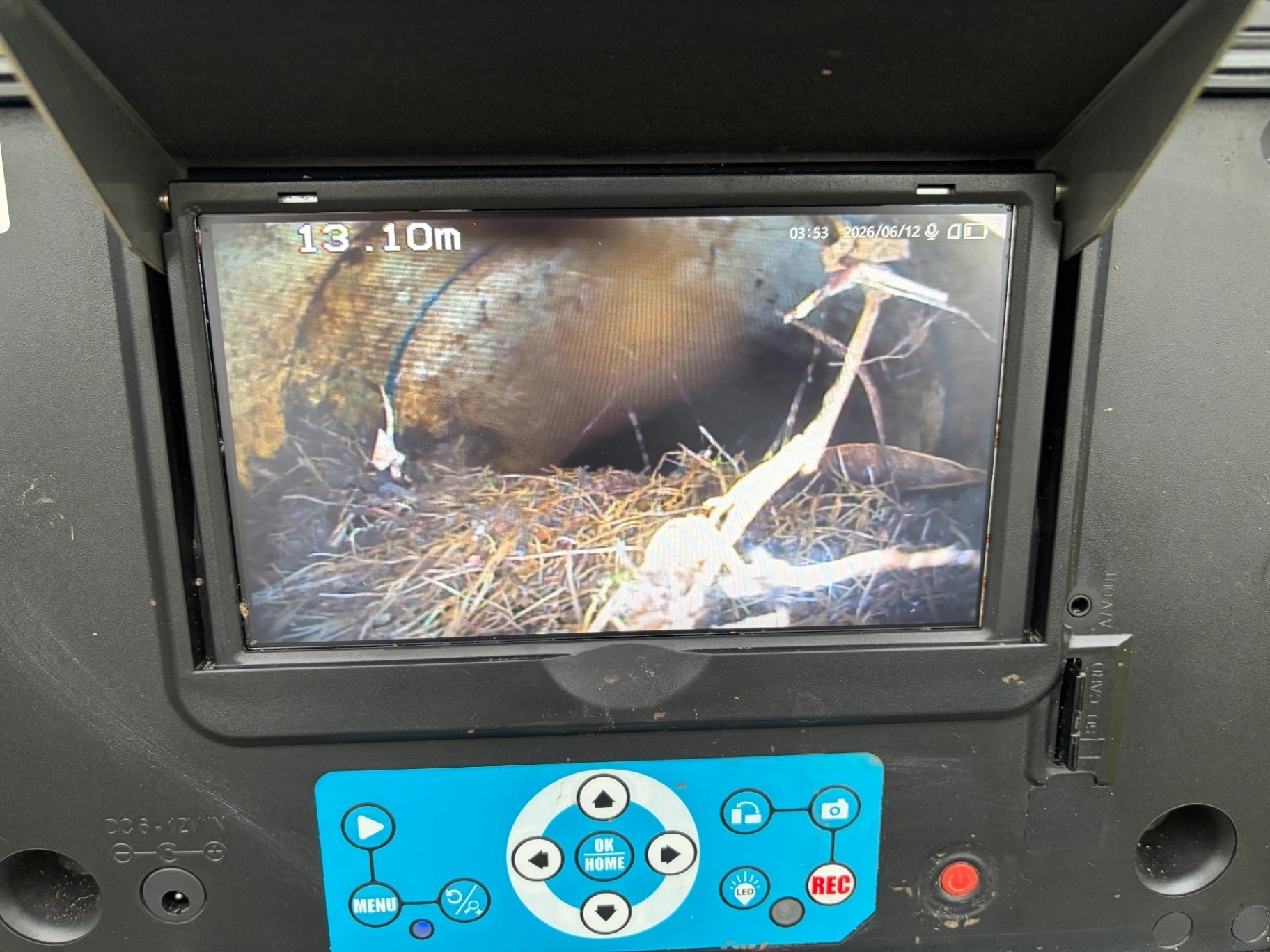
Rather than connecting the new drainage system to pipework without knowing its condition, our team exposed the existing stormwater line and carried out a CCTV drain inspection.
This allowed us to inspect both the new and existing pipework, confirming the drainage pathway was clear and suitable before the final connection was made.
Why We Don't Connect New Drains to Unknown Pipes
One of the easiest ways for a drainage project to fail is by connecting a brand-new system into an existing pipe that's already partially blocked or damaged.
From the surface, everything may appear to be working.
Underground tells a different story.
Using specialised CCTV drain camera equipment, we inspected the existing stormwater infrastructure to confirm there were no hidden obstructions, collapsed sections or drainage issues that could compromise the new installation.
Only after verifying the downstream pipework was suitable did we proceed with the final connection.
It's an extra step that provides confidence the entire drainage system—not just the newly installed section—will perform as intended.
Catching Groundwater Before It Reaches the Surface
Unlike a standard surface drain that only collects visible runoff, a subsoil drainage system works below ground where the problem actually begins.
Our team excavated the full drainage trench before core drilling through the retaining wall to create a controlled pathway for the new stormwater connection.
A dedicated PVC stormwater line was installed alongside a continuous agricultural drainage pipe (Ag Pipe).
Many people assume the slots in an AG pipe allow water to escape.
It's actually the opposite.
Those slots allow groundwater to enter the pipe.
As moisture naturally moves through the surrounding soil, it passes through the drainage aggregate and into the slotted pipe, where gravity carries it safely into the stormwater system.
Instead of waiting for water to appear on the surface, the drainage system intercepts it while it's still travelling underground.
Why Blue Metal and Geotextile Matter
One of the biggest reasons older subsoil drainage systems fail isn't the pipe itself.
It's the soil surrounding it.
Without proper filtration, fine particles gradually wash into the drainage stone and eventually fill the spaces that groundwater once flowed through.
Over time, the drainage trench slowly becomes compacted until water can no longer move freely.
To prevent this, the AG pipe was surrounded with clean blue metal aggregate before the entire drainage system was wrapped in geotextile fabric.
The aggregate creates open pathways that encourage groundwater to move towards the pipe, while the geotextile acts as a filter, allowing water through while helping keep surrounding soil out.
It's a relatively simple detail, but one that significantly improves the long-term performance of underground drainage systems.
Building in Access for the Future
Good drainage design doesn't stop once the pipes are installed.
Our team also incorporated a dedicated inspection and clean-out point at the beginning of the new stormwater line.
While homeowners hope they'll never need to use it, this access point allows future CCTV inspections, maintenance and drain cleaning to be carried out without excavating the lawn or disturbing the completed landscaping.
It's a practical feature that makes long-term maintenance far easier should it ever be required.
Restoring the Property
Once the drainage system had been tested and commissioned, the trench was carefully backfilled and compacted.
Previously removed paving was reinstated, the surrounding ground was levelled, and stored turf was relaid where applicable.
By the time the project was complete, very little evidence remained that more than twenty metres of underground drainage infrastructure had been installed beneath the landscape.
The Best Drainage Systems Are the Ones You Never Notice
Most homeowners never think about groundwater because they can't see it.
That's exactly how it should be.
A properly designed subsoil drainage system quietly works beneath the surface, collecting water long before it has the opportunity to create muddy lawns, saturated soil or pressure behind retaining walls.
For this Cherrybrook property, the combination of correctly graded stormwater pipework, slotted AG pipe, blue metal aggregate, geotextile filtration, CCTV verification and dedicated maintenance access created a comprehensive groundwater management solution designed for long-term reliability.
The finished drainage system is almost invisible.
What the homeowner will notice instead is that the lawn dries more consistently after rain, the retaining wall is no longer subjected to the same groundwater pressure, and water has stopped choosing its own path through the property.
That's the real measure of a successful drainage project.
Subsoil Drainage & Groundwater Solutions in Cherrybrook
Groundwater problems are rarely solved by simply installing another drain. They require an understanding of how water behaves beneath the surface and a drainage system designed specifically for the property's landscape.
Pure Plumbing Professionals designs and installs subsoil drainage systems, AG drains, retaining wall drainage and stormwater solutions throughout Cherrybrook and surrounding suburbs.
Our services include:
- Subsoil Drainage Installation
- Backyard Drainage
- Agricultural (AG) Drain Installation
- Groundwater Management
- Retaining Wall Drainage
- Stormwater Drainage Systems
- CCTV Drain Inspections
- Surface Water & Groundwater Solutions
- Property Drainage Upgrades
Whether your lawn stays wet long after rain, you're experiencing groundwater around a retaining wall or you're planning a drainage upgrade for a sloping property, our experienced drainage plumbers can design a long-term solution that protects your home from below the surface.
